
FAQs About TMJ
TMJ (temporomandibular joint) disorder causes pain and discomfort in the jaw, often accompanied by headaches and difficulty opening the mouth. It can be triggered by stress, teeth grinding, or injury. Our FAQs address common questions about TMJ, its symptoms, causes, and treatments. Dr. Maryam Hadian at Le Chic Dentist in Santa Monica offers care to help manage and alleviate TMJ pain effectively. For more information, contact us today or schedule an appointment online. We are conveniently located at 3755 Sawtelle Blvd, Los Angeles, CA 90066.


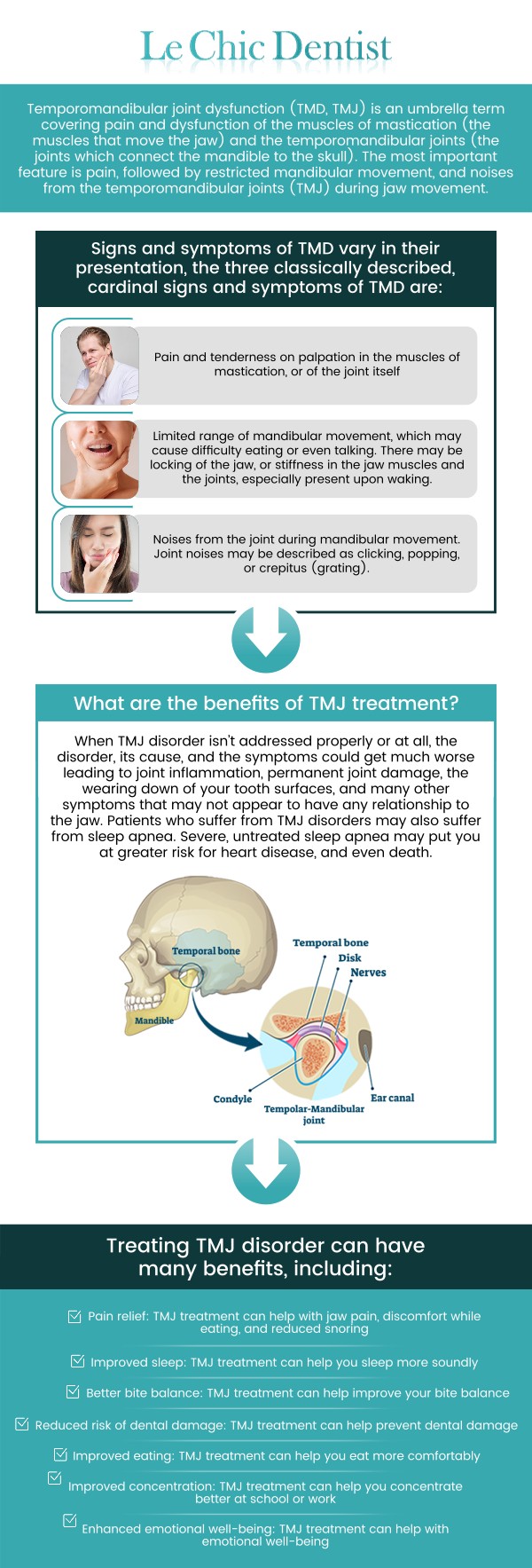
Table of Contents:
What is TMJ disorder?
What causes TMJ disorder?
What are the most common symptoms of TMJ disorder?
Can TMJ cause headaches or migraines?
Why does the jaw click or pop with TMJ?
Can stress make TMJ symptoms worse?
How is TMJ disorder diagnosed?
What treatments are available for TMJ pain?
Can TMJ go away on its own?
What lifestyle changes help manage TMJ symptoms?
Can teeth grinding cause TMJ disorder?
Are night guards helpful for TMJ problems?
Can TMJ affect hearing or cause ear pain?
Is TMJ disorder a long-term condition?
When should medical care be sought for TMJ symptoms?
Can physical therapy help relieve TMJ pain?
How does posture affect TMJ health?
Can TMJ cause difficulty opening the mouth?
Are there exercises that help with TMJ pain?
What happens if TMJ disorder is left untreated?
TMJ disorder, also known as temporomandibular joint disorder, refers to a condition that affects the jaw joint, causing pain and dysfunction. The temporomandibular joint connects the jawbone to the skull, and when it becomes misaligned or damaged, it can lead to pain in the jaw, face, neck, and even headaches. This condition can make it difficult to chew, talk, or open the mouth fully. At Le Chic Dentist, Dr. Maryam Hadian can diagnose and treat TMJ disorder to help restore proper jaw function.
TMJ disorder can have several causes, including jaw injuries, teeth grinding (often due to stress), arthritis, or misalignment of the teeth and jaw. In some cases, it may be linked to a habit of clenching the jaw or grinding teeth, especially during sleep. Other contributing factors include poor posture and an uneven bite. Dr. Hadian at Le Chic Dentist can assess these factors and recommend the best course of treatment to address the underlying cause of TMJ symptoms.
The most common symptoms of TMJ disorder include jaw pain, headaches, clicking or popping sounds when opening or closing the mouth, difficulty chewing, and a limited range of motion in the jaw. Some patients also experience earaches, dizziness, and facial swelling. If you’re experiencing any of these symptoms, it’s important to consult Dr. Hadian at Le Chic Dentist for a proper evaluation and treatment plan tailored to your needs.
Yes, TMJ disorder can contribute to headaches or migraines, especially tension headaches. When the jaw muscles become tense or overworked due to TMJ issues, it can lead to pain radiating to the head. The tension from clenching or grinding the teeth can affect the surrounding muscles, causing frequent headaches. If you experience this symptom, Dr. Hadian at Le Chic Dentist can offer effective treatments to relieve both TMJ and headache pain.
The clicking or popping sound associated with TMJ occurs when the disc inside the temporomandibular joint moves out of place. This disc helps the jaw to open and close smoothly. If the disc becomes displaced, it can cause the jaw to make popping or clicking sounds during movement. This condition can be uncomfortable and might cause pain in the jaw, face, or neck. Dr. Hadian can help manage and treat this issue, improving jaw function and alleviating discomfort.
Yes, stress is a common trigger for TMJ symptoms. Stress can lead to teeth grinding or jaw clenching, both of which put strain on the temporomandibular joint and exacerbate pain and discomfort. Over time, this can make TMJ symptoms more severe and harder to manage. Managing stress through relaxation techniques, physical therapy, and lifestyle changes can help alleviate TMJ-related pain. At Le Chic Dentist, Dr. Hadian can also recommend effective treatments to address stress-related TMJ symptoms.
TMJ disorder is diagnosed through a combination of a physical examination and the patient’s medical history. Dr. Hadian will assess the jaw joint for tenderness, popping or clicking sounds, and limited range of motion. She may also use imaging tests, such as X-rays, to evaluate the structure of the jaw joint and rule out other conditions. This comprehensive approach helps identify the exact cause of TMJ symptoms and guides the treatment plan.
Treatment for TMJ pain can vary depending on the severity and cause of the disorder. Common treatments include physical therapy to strengthen the jaw muscles, medications such as pain relievers or muscle relaxants, and night guards to prevent teeth grinding. Botox injections are also an effective option, as they can help relax the jaw muscles and reduce pain. Dr. Hadian at Le Chic Dentist will work with you to find the most effective treatment based on your specific symptoms and needs.
In some cases, TMJ symptoms may improve on their own with lifestyle changes such as stress reduction, avoiding hard foods, or using ice or heat packs. However, for many people, TMJ requires professional treatment to manage symptoms and prevent the condition from worsening. Dr. Hadian can evaluate your condition and recommend treatment options that will provide relief and restore function to the jaw joint.
Managing stress, avoiding chewing gum, and eating soft foods can help reduce the strain on the jaw. Good posture is also essential, as poor posture can exacerbate TMJ symptoms by putting additional pressure on the jaw. Dr. Hadian may recommend certain exercises to help relax the jaw muscles and improve jaw movement. In some cases, wearing a night guard to prevent teeth grinding at night can be highly effective in managing TMJ symptoms.
Yes, chronic teeth grinding (also called bruxism) can lead to TMJ disorder. The repetitive force from grinding the teeth can wear down the teeth and cause excessive strain on the temporomandibular joint, leading to pain, inflammation, and dysfunction. Dr. Hadian at Le Chic Dentist may recommend a night guard or other treatments to protect your teeth and relieve pressure on your TMJ.
Yes, night guards are commonly used to treat TMJ disorder, particularly if teeth grinding is contributing to the problem. A night guard helps protect your teeth from the damaging effects of grinding while also reducing the strain on the temporomandibular joint.
TMJ can cause ear pain and a sensation of fullness in the ears because the temporomandibular joint is located near the ear canal. The muscles around the jaw can put pressure on the ear, leading to discomfort or even ringing in the ears (tinnitus). If you’re experiencing ear pain along with TMJ symptoms, Dr. Hadian at Le Chic Dentist can help determine the best course of treatment.
TMJ disorder can be either short-term or chronic, depending on the underlying cause and the severity of symptoms. With proper treatment, many people experience relief and manage their TMJ symptoms effectively. However, without treatment, the condition can persist and lead to more significant issues. Dr. Hadian will work with you to create a personalized treatment plan aimed at reducing symptoms and improving long-term function.
If TMJ symptoms are severe, persistent, or interfere with your daily activities, it’s important to seek medical care. If you experience difficulty opening or closing your mouth, severe jaw pain, or persistent headaches, you should see Dr. Hadian for an evaluation. Prompt treatment can help prevent the condition from worsening and improve your quality of life.
Physical therapy can be highly effective in treating TMJ pain. Specific exercises can strengthen the muscles around the jaw, improve the range of motion, and reduce muscle tension. Physical therapy can also help alleviate the pain caused by misalignment or dysfunction in the TMJ.
Poor posture, especially slouching or jutting the head forward, can strain the muscles and joints in the neck and jaw, worsening TMJ symptoms. Good posture helps to reduce pressure on the TMJ and improve overall jaw function. Dr. Hadian at Le Chic Dentist may provide guidance on maintaining proper posture to alleviate TMJ discomfort.
Yes, one of the common symptoms of TMJ disorder is difficulty opening the mouth fully. This occurs when the jaw joint becomes inflamed or misaligned, making it painful or difficult to move the jaw. Treatment from Dr. Hadian at Le Chic Dentist can help restore proper jaw function and alleviate this limitation.
Yes, there are exercises specifically designed to relieve TMJ pain. These exercises can help stretch and strengthen the muscles surrounding the jaw, reduce muscle tension, and improve jaw movement.
If TMJ disorder is left untreated, it can lead to chronic pain, difficulty chewing or speaking, and further damage to the temporomandibular joint. The condition may worsen over time, leading to long-term dysfunction. Seeking early treatment from Dr. Hadian at Le Chic Dentist can help manage symptoms and prevent the condition from progressing.
At Le Chic Dentist, we understand the impact TMJ disorder can have on your daily life, and we are committed to providing personalized care to help you find relief. Whether through Botox or other treatment options, Dr. Maryam Hadian will guide you toward the best solution for your needs. For more information, contact us today or schedule an appointment online. We are conveniently located at 3755 Sawtelle Blvd, Los Angeles, CA 90066. We serve patients from Santa Monica Los Angeles CA, Downtown LA, Beverly Hills CA, Inglewood CA, Marina Del Rey CA, Playa Vista CA, El Segundo CA, Mar Vista CA and surrounding areas.
Check Out Our 5 Star Reviews


Additional Services You May Like

Additional Services You May Like
- Smile Makeover
- Cosmetic Dentistry
- Veneers
- Invisalign
- Dental Implants
- Teeth Whitening
- Inlays & Onlays
- Crowns
- Retainers
- Teeth Cleaning
- Botox TMJ
- Dental Bridges
- Oral Cancer Screening
- Fillings
- Dental Dentures
- Dental Exam
- Root Canal
- Gum Disease Treatment
- Oral Surgery
- TMJ Treatment
- Botox and Dermal Fillers
- Dental X-Ray
- General Dentistry
- Pediatric Dentist
- Single Crown
- Emax Crown
- Porcelain Crown